Leave the home, do not flip light switches or use anything that could spark, and call your gas utility or 911 from a safe distance. Our gas leak safety guide has the full step by step. Once the utility confirms it is safe to re-enter, call Afternoon Plumbing to repair the house-side regulator or gas line.
Gas appliance hookups
Propane or natural gas regulator replacement in Westminster, MD
A leaking or corroded regulator on a house-side gas line is the kind of problem that does not wait. Afternoon Plumbing replaces propane or natural gas regulators for homeowners in Westminster and across Carroll County.
★42 five-star Google reviews✓Free estimates✓Upfront pricing✓1-year labor warranty
What we replace
Signs your regulator needs to be replaced
Sulfur or rotten-egg smell near the regulator or gas line
Visible corrosion, pitting, or green patina on the regulator body
Frost or ice forming on the regulator in cold weather
Soot, scorch marks, or discoloration around the regulator vent
Appliances that flame yellow, pop, or go out unexpectedly
Hissing sounds or bubbles when a leak-detection solution is applied
Age: most regulators last 10-15 years before they start to fail
Propane vs natural gas
Two fuels, same job, slightly different setup
Propane regulators
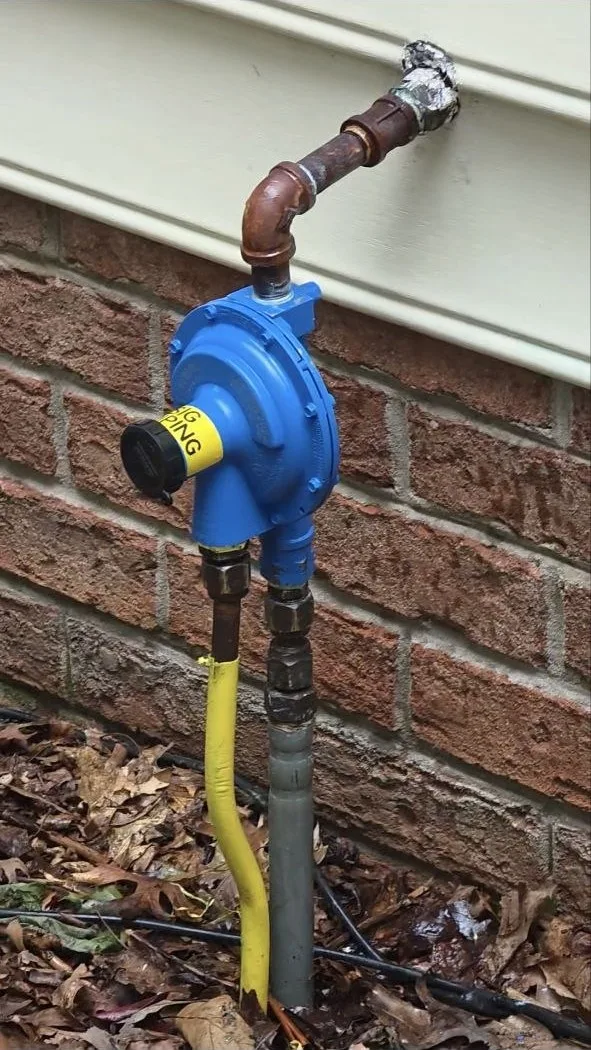
On propane systems, the first-stage regulator is usually mounted on the exterior wall of the home or directly on the propane tank. It drops tank pressure down to a level the home's appliances can use. Corrosion is the most common failure mode, especially on older two-pound adjustable regulators that have been in place for over a decade.
Natural gas regulators
On natural gas, the utility owns the meter and the regulator attached to it. A secondary regulator - needed for high-pressure appliances or specific equipment - can live indoors or outside the house; we have replaced both. We replace house-side natural gas regulators wherever they sit.
Who's responsible for what
The gas utility or propane supplier owns everything up to and including the meter (or up to the outlet of the first-stage tank regulator). Everything downstream of that is the homeowner's responsibility. We work on the house side and coordinate with the utility if the issue turns out to be upstream.
When the utility needs to come first
If the leak is at the meter, on the utility side of the meter, or in the line between the meter and the house before our regulator, the utility needs to dispatch first.
What to expect
Our regulator replacement process
From the first phone call to a working gas system, here is what happens on a typical Westminster regulator swap.
Upfront pricing
Get a free, upfront quote before any work starts
We look at the regulator, the line, and the appliances, then give you a firm estimate. No hidden fees, no surprises.
We confirm the leak is on the house side of the meter or tank and identify the regulator. If the leak is upstream, we point you to the utility.
2
Quote and schedule
We give you a free, upfront quote based on the regulator type, line material, and accessibility. Regulators are ordered or picked up from a supply house, so the install is scheduled for when the part is in hand.
3
Shut off, swap, leak-test
Gas is shut off at the tank or meter. We remove the old regulator, install the new one to code, and leak-test every connection before restoring service.
4
Restore and relight
We relight affected appliances, confirm pressure and flame color, and walk you through what was done.
What goes into the quote
What affects the cost of a regulator replacement?
The regulator type
A standard single-stage house-side regulator is a simpler swap than a two-pound or high-capacity unit. The type is set by your tank or meter setup, which we confirm on the estimate visit.
The condition of the connecting pipe
Years of weather can leave the surrounding pipe and fittings rusted or seized. Connectors in good shape make the swap straightforward; corroded ones add work we will spot and show you during the estimate.
Downstream fittings
If the leak reached the fittings or the flex connector, those need replacing too - the estimate covers the full path, not just the regulator body.
Every quote is free and upfront
We confirm what is needed on a free estimate visit, then give you a firm number before any work starts. Call 443-789-2897 or request an estimate.
The actual call we got
A Westminster homeowner smelled something wrong near the garage-side regulator.
What the homeowner noticed
They caught a faint gas smell - something close to propane, with the sharp rotten-egg edge gas companies add on purpose. Not enough to feel alarming at a distance, but enough to take seriously.
The smell pointed to the regulator on the exterior wall.
What we did when they called
They called Afternoon Plumbing, and we came out to look. We sprayed leak-detection solution on the regulator and watched bubbles form right on the body - the escaping gas was coming from the regulator itself. We identified the regulator model and ordered the replacement.
The job took two visits: the first to confirm the leak and order the part, then a return visit on a Sunday to install it and leak-test. Here is what we found and what we did, photo by photo.
The job, photo by photo
What we found at the regulator and how we fixed it
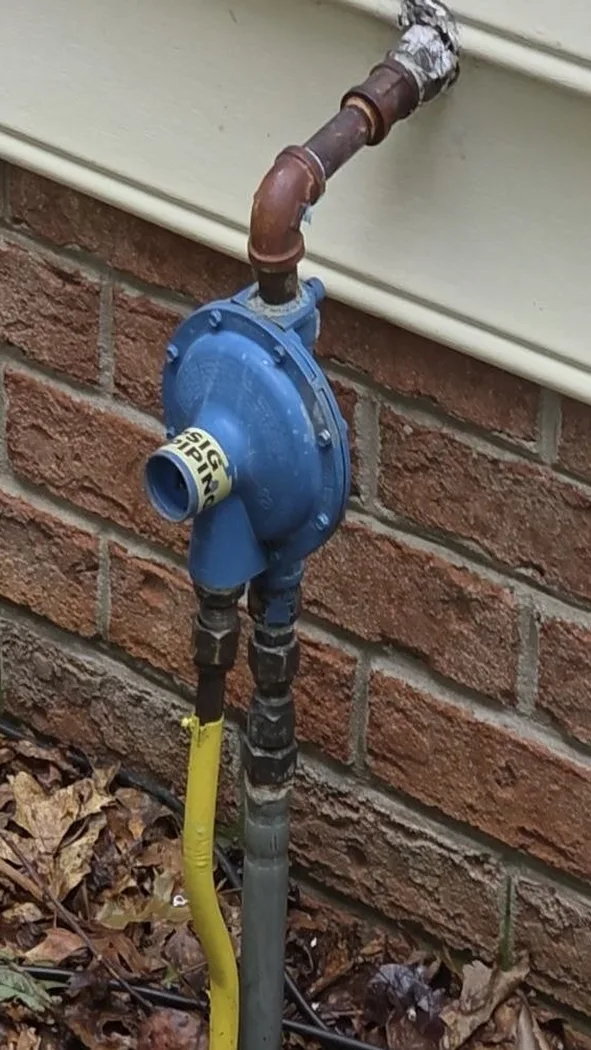
Old regulator, still mounted: matte, weathered unit on the wall before replacement - this is where the leak-detection test showed bubbles.
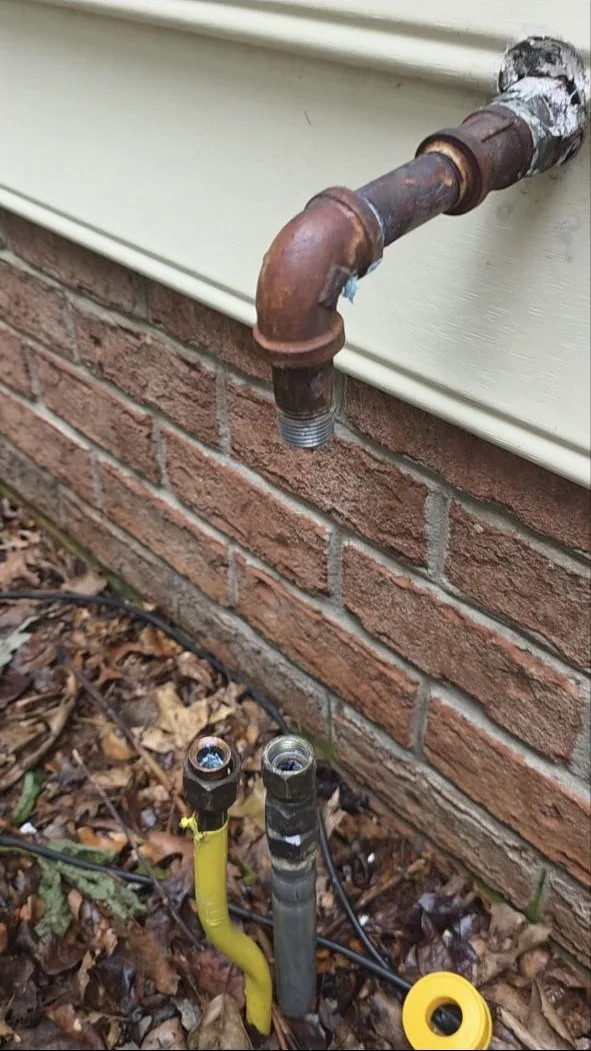
Old unit off: the pipe run open after removal, with fresh yellow gas-rated thread tape ready for the swap.
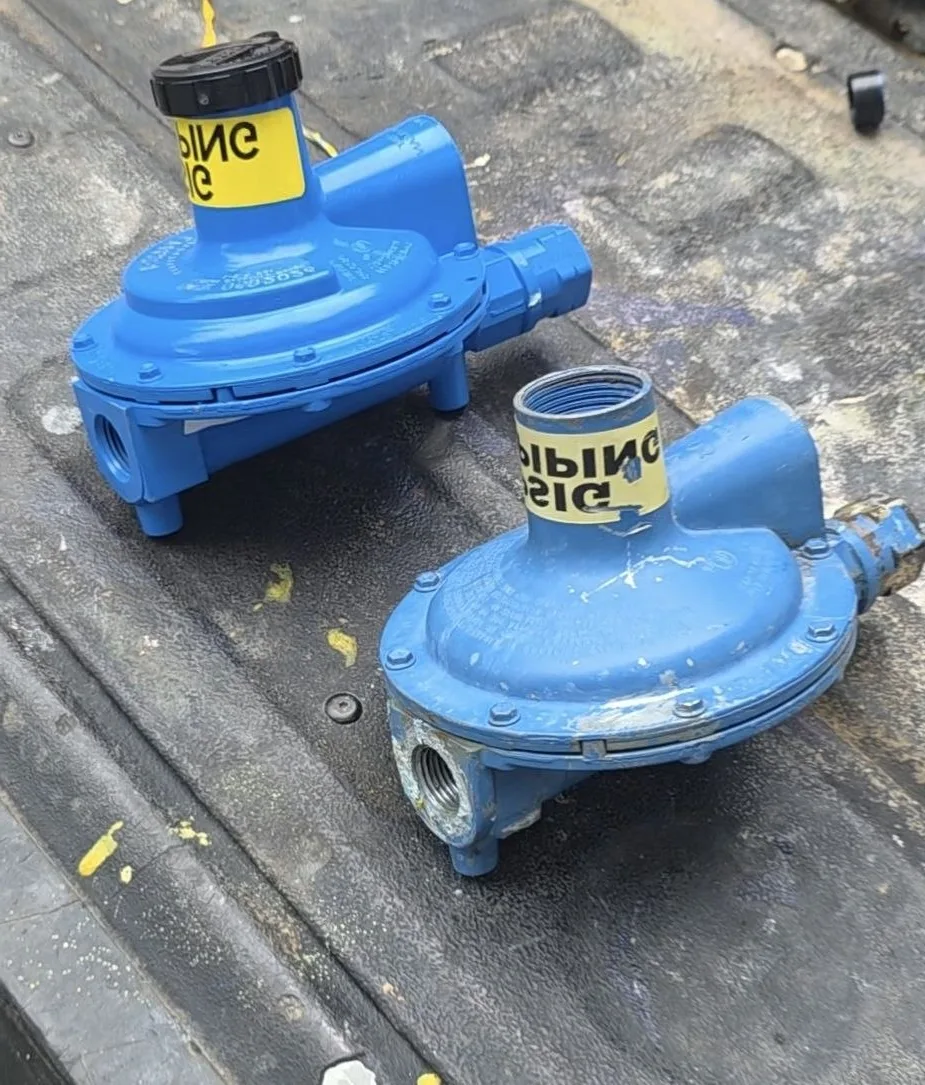
Side by side: old and new regulators in the truck bed after the swap. Same form factor, fresh seals and threads.
New regulator installed: glossy new unit on the gas line, leak-tested and ready for years of service.
Common questions
Gas regulator FAQ
If I smell gas, what should I do first?
Leave the home, do not flip light switches or use anything that could spark, and call your gas utility or 911 from a safe distance. Once the utility confirms it is safe to re-enter, call Afternoon Plumbing to repair the house-side regulator or gas line.
What is a propane or natural gas regulator?
A regulator reduces high-pressure gas from the tank or utility meter down to the lower pressure your home appliances use. On propane systems, the regulator is usually mounted on the exterior wall of the home. On natural gas, it can be on the meter or at the appliance.
How do I know if my gas regulator is failing?
Common signs include a sulfur or rotten-egg smell near the regulator, visible corrosion on the regulator body, frost or ice on the regulator in cold weather, soot or discoloration around the vent, and appliances that flame yellow instead of blue. Any active leak should be treated as an emergency.
Can a plumber replace a gas regulator?
Yes. Licensed plumbers in Maryland routinely replace house-side propane or natural gas regulators, including the line between the meter or tank and the home. The utility owns everything up to and including the meter; everything downstream is the property owner's responsibility and is where we work.
How long does a regulator replacement take?
Most single regulator swaps are a short visit, including leak testing the new connection. We verify pressure, check for leaks at every joint, and confirm the appliance side is operating correctly before restoring service.
Will my gas be shut off during the replacement?
Yes, the gas is shut off at the tank or meter for the duration of the swap. Once the new regulator is installed and tested, we restore service and relight any affected appliances.
Do you handle propane or natural gas regulators?
Yes. We replace house-side regulators on propane tanks and natural gas meters across Westminster and Carroll County.